Category: Uncategorized

  • Energy Resilience Matters

    Energy Resilience Matters

    Since my retirement from the Army in December 2017, I have had the privilege of leading the Knox Regional Development Alliance (KRDA) – a community-based non-profit organization with a mission of protecting and promoting Fort Knox to increase its economic impact. Each and every day our team works to showcase the many attributes that make Fort Knox a premier military installation with a first-class defense community. With nearly three years as KRDA’s CEO under my belt, I’ve seen firsthand how factors like energy resilience set installations and defense communities apart from others.

    Energy Resilience Matters. The Department of Defense (DOD) is reliant on civilian electrical grids to power installations, which are susceptible to weather events and physical or cyber attacks. The ability of an installation to limit its reliance on the civilian network or completely generate its own power provides for continuity of operations. This resilience can come in the form of alternate forms of energy, the installation being a micro grid of the larger electrical grid, or a combination of the two. The Navy at Naval Construction Battalion Center Gulfport has partnered with local energy providers to establish a solar system; micro grids have been used at Otis Air National Guard Base in Massachusetts and Subbase New London in Connecticut and a few other places. While these are steps in the right direction, the unique capabilities at Fort Knox make it the best energy program in all of DOD.

    Defining Energy Resilience. Energy security and energy resilience are sometimes used interchangeably, but there is a difference. Energy security is ensuring an installation has reliable, protected access to energy in sufficient quantities to meet the needs of its various missions. Energy resilience takes it a step further ensuring that in the event of disruptions in commercial energy services, the installation can continue to provide reliable sufficient energy for its missions. Those potential disruptions could be natural or man-made (by bad actors). In Fort Knox’s case, it was a natural disruption – a 2009 ice storm that left the installation without power for several days – that fueled the post’s leadership toward energy independence.

    Section 101 of title 10, United States Code (U.S.C.) says energy resilience is “the ability to avoid, prepare for, minimize, adapt to, and recover from anticipated and unanticipated energy disruptions in order to ensure energy availability and reliability sufficient to provide for mission assurance and readiness, including mission essential operations related to readiness, and to execute or rapidly reestablish mission essential requirements.”

    Becoming an Energy Island. Like several other military installations, Fort Knox is on its own microgrid.  While it is still connected and powered by the main grid, being on a separate microgrid allows the installation to operate as a separate energy island. Having alternative energy sources to fuel the microgrid in the event of the disruption is what determines resiliency and sets Fort Knox apart from all others. Early guidance required that Army installations be capable of powering critical missions for a minimum of 14 days in the event of a disruption; current guidance leaves it to the discretion of the post commanding general; Fort Knox is working towards one year.
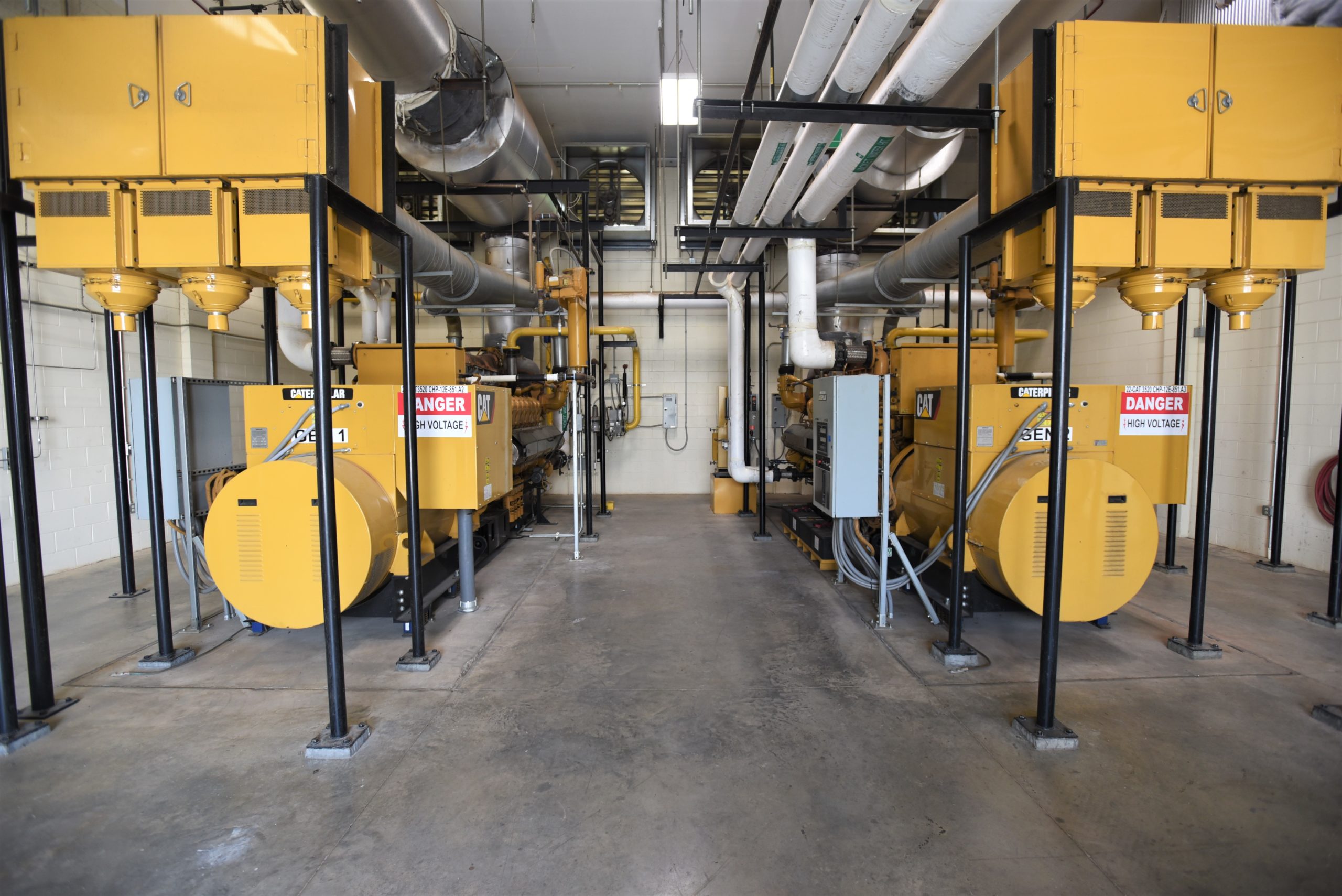
    While several installations are working toward the 14-day standard, few have realized that capability like Fort Knox has. Thanks to support from the Kentucky Congressional Delegation, Fort Knox is able to tap into the rich natural gas reserves on the installation to help fuel its back-up generators, and on at least two occasions, the installation has demonstrated its ability to operate completely independent from its commercial power provider. The micro grid, the ability to generate its own power, extensive use of geothermal heating and cooling and real-time facility monitoring truly puts Fort Knox in a class all by itself.

    Fort Knox’s energy program is critical for the many missions taking place that have significant information technology needs. The installation’s energy independence also makes Fort Knox an ideal location for other missions with large data centers. Additionally, when there is a power disruption, the commercial energy providers can focus on critical needs outside the gate knowing Fort Knox is up and running. That makes for a good neighbor and Fort Knox couldn’t be a better one.

    Next time, I’ll share more on how our community is being a good neighbor to Fort Knox. Until then here are some helpful links on the subject of energy resilience.


    Brig. Gen. (Ret) Jim Iacocca 
    President / CEO
    Knox Regional Development Alliance
     

  • KRDA partners with Kentucky Career Center, Fort Knox to assist military spouse

    KRDA partners with Kentucky Career Center, Fort Knox to assist military spouse

    New three-step process provides proactive career coaching, professional networking

    The Knox Regional Development Alliance (KRDA) announced today a new and innovative approach to supporting military spouses relocating to the Greater Knox region, as well as spouses who already are here and interested in finding employment.
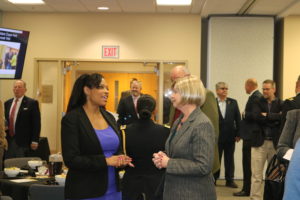
    KRDA developed a first-of-its-kind, comprehensive model in partnership with the Kentucky Career Centers – Lincoln Trail (KCC-LT), the Lincoln Trail Workforce Development Board (LTWDB) and Fort Knox.

    KCC-LT will oversee the three-step process featured on the new Greater Fort Knox website greaterfortknox.com, which begins with a short questionnaire. From there, information gathered helps match participants with an experienced KCC-LT professional who will help with job search and training at no cost.

    “Whether it’s training, career workshops or help finding employment, our career center team provides a one-stop shop for any employment or training needs,” said LTWDB Sherry Johnson. The LTWDB oversees the KCC-LT.

    Additionally, military spouses will be matched with a community connector who will help them grow their professional network, which can often open the door to new professional opportunities. KRDA helped recruit the volunteer community connectors who are providing this added support.

    “Statistics say that upwards of 70 percent of job opportunities don’t come from a job board but rather from professional relationships that military spouses, being new to the community, typically don’t have,” said KRDA CEO Brig. Gen. Retired Jim Iacocca. “We are tapping into our caring, supportive community to help our military spouses connect with organizations and people who may open the door to a new employment opportunity. As expected, the community response was immediate and overwhelming and we couldn’t be more grateful.”

    Iacocca shared details of the model with Army Human Resources Command (HRC) officials who agreed to include the resource on military orders of any Soldier coming to Fort Knox.

    “This allows military spouses to access this support even before they arrive,” Iacocca said. “We appreciate HRC’s support as we work to be proactive in our support to military families.”

    Melinda Roberts, Fort Knox’s Chief of Army Community Services (ACS), praised the community for partnering with Fort Knox ACS to develop this comprehensive model of support to help military spouses find employment.

    “Providing employment support to our military spouses is a top priority from the Secretary of Defense to the Chief of Staff of the Army and, of course, right here at Fort Knox,” Roberts said. “We always are looking for new and innovative ways to tap into community resources and think this new model could become an Army best practice. We are fortunate to have great community partners who want to help us do the very best we can for our Army families.”

    LTWDB chairman, U.S. Navy veteran and state representative Dean Schamore said the Greater Fort Knox region has a proud tradition of supporting the military and their families.

    “In 2018, the Association of Defense Communities named the Fort Knox region a Great American Defense Community so it comes as no surprise to me that our community would set the bar high when it comes to supporting military spouses,” Schamore said. “You won’t find a more committed, patriotic and caring community.”

    Iacocca encouraged all military spouses looking for employment or training opportunities to visit greaterfortknox.com/jobs to learn more and tap into these resources.

    “Whether you are about to move here, have just moved here or have been stationed at Fort Knox for some time, the community wants to help.” Iacocca said.

  • KRDA Launches Greater Fort Knox Website

    KRDA Launches Greater Fort Knox Website

    Site is an informational one-stop shop for military families moving to the area

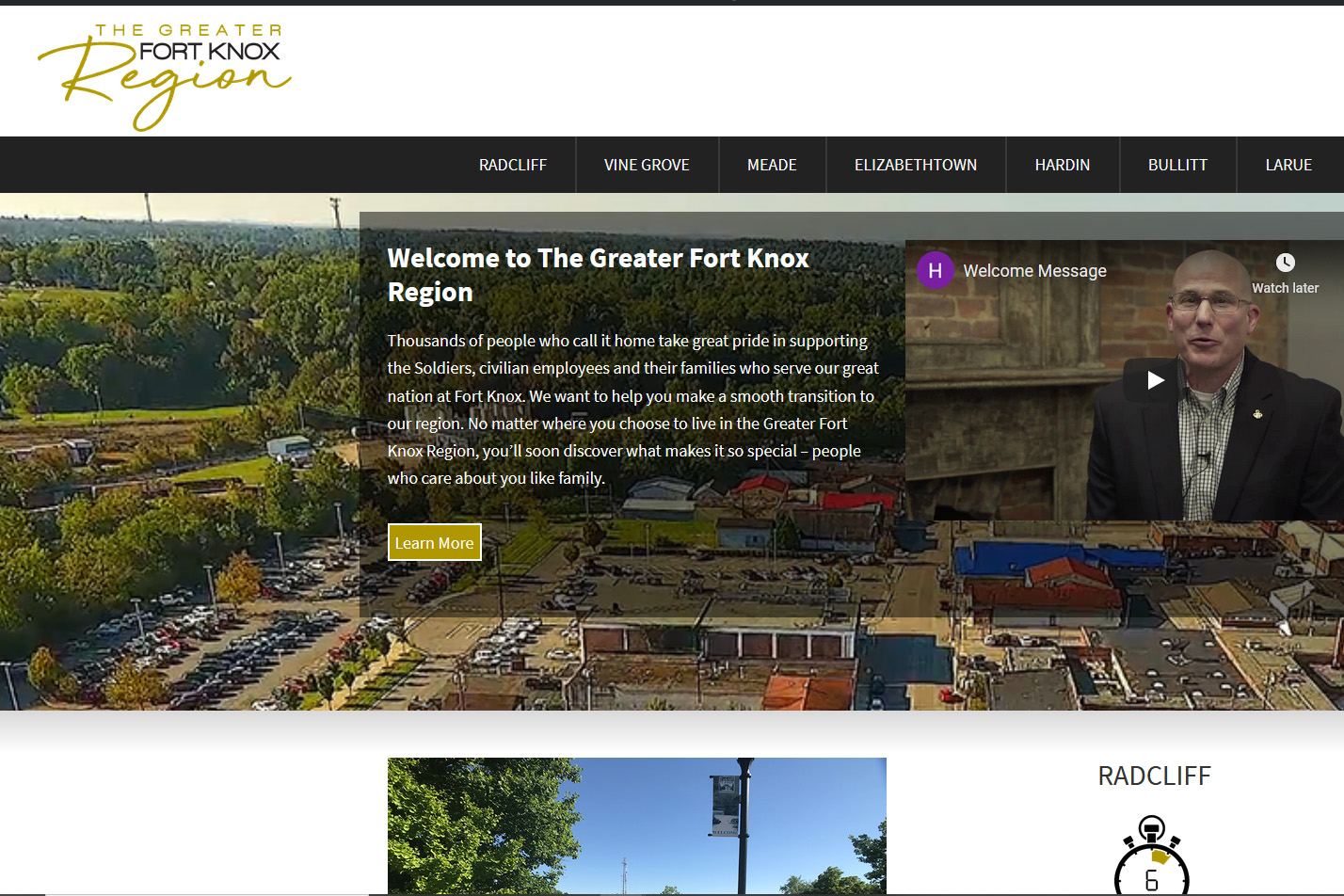
    Knox Regional Development Alliance (KRDA) recently announced the launch of a comprehensive website featuring information on communities in the Greater Fort Knox Region. The site, greaterfortknox.com, is a one-stop virtual location for military families relocating to the area.
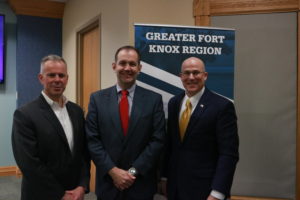
    “Moving to a new area can be daunting, especially for military families,” said KRDA CEO Brig. Gen. Retired Jim Iacocca. “Nowhere else in the country will you find more military-friendly communities than those surrounding Fort Knox. This is our way of welcoming military families and showcasing the quality of life they will enjoy in this region.”

    KRDA consulted Fort Knox leadership on information military families seek when relocating to the region. The site, designed by marketing firm Heartland Communications Consultants, Inc., features resources for education and childcare, government services, utilities and community information for Radcliff, Vine Grove, Elizabethtown and the rest of Hardin County, as well as Meade, Bullitt and LaRue counties. In addition, the site’s employment section provides information on job opportunities and career coaching for military spouses and family members.

    “The purpose of this site is to make the transition of military families a bit easier by providing a list of community resources specific to our region, all in one location,” said KRDA Chairman and Abound Credit Union CEO Ray Springsteen. “Where ever they choose to call home when stationed at Fort Knox, we want these families to know they will be supported.”

  • Brig. Gen. Andy Munera Sees Positive Future for Fort Knox, Region

    KRDA updates investors, shares plans for future

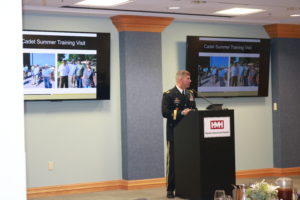
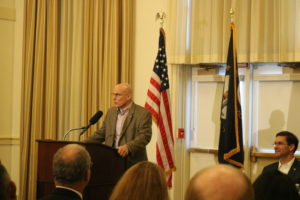
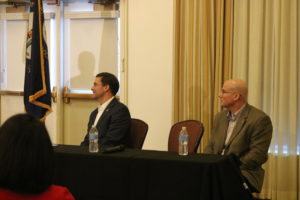
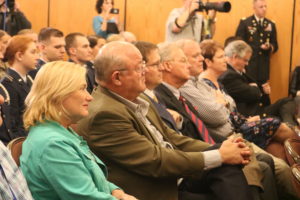
    Brig. Gen. Andy Munera painted a positive picture of Fort Knox’s growing importance within the Department of Defense and national security at the Knox Regional Development Alliance’s annual investor meeting today.

    Munera, the deputy commanding general of U.S. Army Cadet Command, cited new programs and expanded missions at the installation, including the Army’s Battalion Commander Assessment Program, or BCAP. The program evaluates officers competing for battalion command across multiple areas including physical fitness, written and oral communications, and cognitive and non-cognitive skills.

    Munera described battalion command as one of the most significant leadership roles in the Army where officers at the rank of Lieutenant Colonel lead upwards of 500 soldiers.

    “The Army chose Fort Knox as the location for the program given its central location as well as the talent management and leader development expertise that resides on post,” said Munera.  The program is in its third week and will run through Feb. 9, with more than 800 candidates being assessed.

    According to Munera, among the Chief of Staff of the Army’s highest priorities is talent management, and Fort Knox’s missions are at the center of that work. He added that the installation’s world-class training areas and ranges as well as its energy security make it well-suited for a broad range of missions.

    Munera said the community’s support of Fort Knox cannot be overstated. “This community, this region is remarkable in all that you do. That makes Fort Knox stronger, and it makes our Army stronger.”

    Following Munera’s remarks and his departure, KRDA investors received an update on the organization’s work in 2019 and its plans for 2020. KRDA Chairman and Fort Knox Federal Credit Union CEO Ray Springsteen praised the progress KRDA has made in promoting Fort Knox and our region and positioning it for growth.

    “Every day KRDA is singularly focused on proactively setting the conditions that help make Fort Knox and our region an ideal choice, whether it’s new missions or new defense-related business or new partnerships,” said Springsteen. “KRDA is making sure we are ready to compete.”

    KRDA CEO Brig. Gen. Retired Jim Iacocca said the community is instrumental in KRDA’s success. “The support of this community to Fort Knox Soldiers and Families is second to none,” he said.

    Iacocca pointed to ECTC’s coding academy as a great example of how the region rises to the challenge.

    “Our contractor partners shared their challenges and needs with us, and our partners at ECTC found a way to respond so quickly that high school students graduating this spring will be able to attend the first coding academy and graduate on time,” said Iacocca. “That means we’ll have high school seniors who will be competitive for high-paying jobs right here in our community. That’s a win for the student, for our region, for Fort Knox and for our Army.”

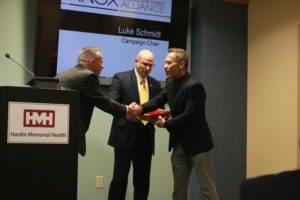
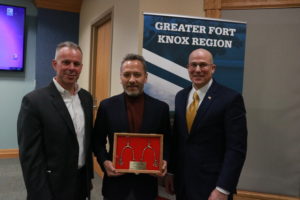
    Iacocca added that initiatives like the coding academy and other community efforts create a competitive advantage when it comes to attracting new missions. Iacocca and Springsteen also recognized outgoing KRDA board member Dennis Johnson, CEO of Hardin Memorial Health, for his instrumental work in establishing KRDA. Johnson and Springsteen co-chaired the initial $2.5 million capital campaign to fund the organization through 2020.

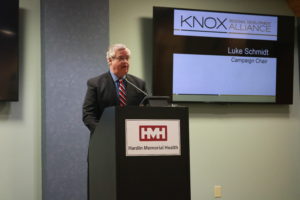
    As the organization enters its fifth year, KRDA board member and business owner Luke Schmidt announced the public launch of KRDA’s second capital campaign to fund the alliance through 2025.

    Schmidt, who is chairing the capital campaign committee, shared that 100 percent of board members have recommitted to financially supporting KRDA and encouraged all investors to do the same. He emphasized the importance of having an organization that is proactively working to protect and promote the region’s $2.6 billion economic engine.

    “We have to remain proactive. We have to keep Fort Knox and our region top of mind with key decision makers because we know other military communities with similar organizations are doing the same thing,” Schmidt said. “That’s why it’s my honor to chair the next capital campaign to fund KRDA from 2021 – 2025.”

    The goal of the campaign is to raise $2.25 million over five years. Schmidt said the committee is also seeking new investors to support KRDA.

  • Secretary of Defense meets KRDA investors 

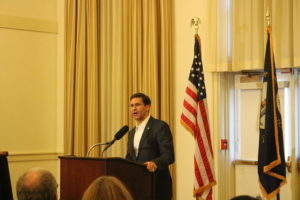
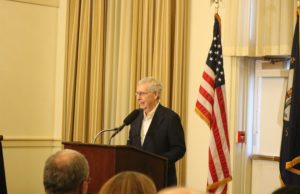
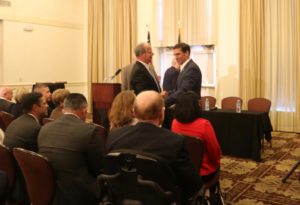
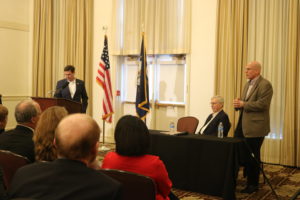
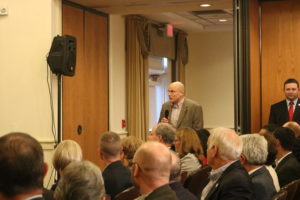
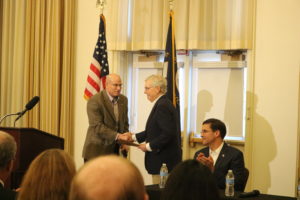
    During his recent visit to Louisville with Sen. Mitch McConnell, Secretary of Defense Mark Esper took time to meet with KRDA investors. Esper discussed the value of Fort Knox provides to our national defense and the importance of hiring military spouses.

  • Lunch with a Fort Knox Leader

    At KRDA’s Lunch with a Fort Knox Leader, Maj. Gen. Donnie Walker talked about his role as Commanding General of the 1st Theater Sustainment Command. 1st TSC Soldiers are deployed in over 20 countries around the world – ensuring warfighters have the supplies and transportation capabilities they need to accomplish their missions.

    DSC_0235
    previous arrow
    next arrow